

I’ve been thinking about infrared photography for a while now.
Not just casually thinking — the kind of thinking where it quietly sits in the back of your mind, waiting for the right moment, the right gear, and honestly… the right energy.
At some point, I stopped thinking and actually did it.
I bought a Nikon body and had it converted for infrared photography in Germany by IRreCams. It felt like a bit of a commitment — this wasn’t just trying a new preset or playing with filters. This was a different way of seeing.
And then, of course, life happened.
Work picked up. Days filled up. And the camera sat there, ready.
Until today.
First Walk, No Excuses
Today I finally went out to shoot.
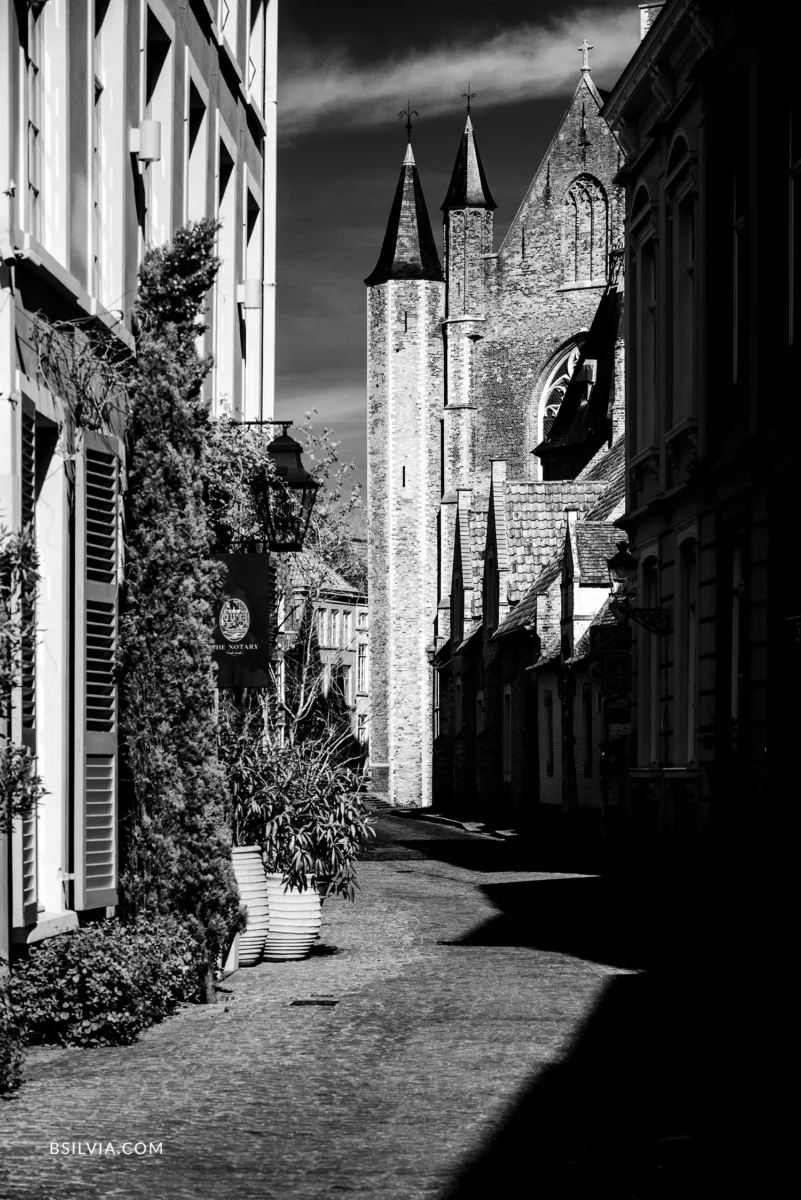
I took the camera, added my Firecrest IR filter on the 70–200mm Nikkor f/2.8, and just… walked. No pressure, no expectations — just trying to understand what infrared actually feels like in real life.
And Bruges, as always, was beautiful.
But also… full.
Tourists everywhere.
Which is, ironically, one of the biggest challenges when you’re trying to shoot clean architectural frames. People in the streets, people in the canals, boats drifting into compositions at exactly the wrong moment — it becomes a game of patience.
Or avoidance 😄
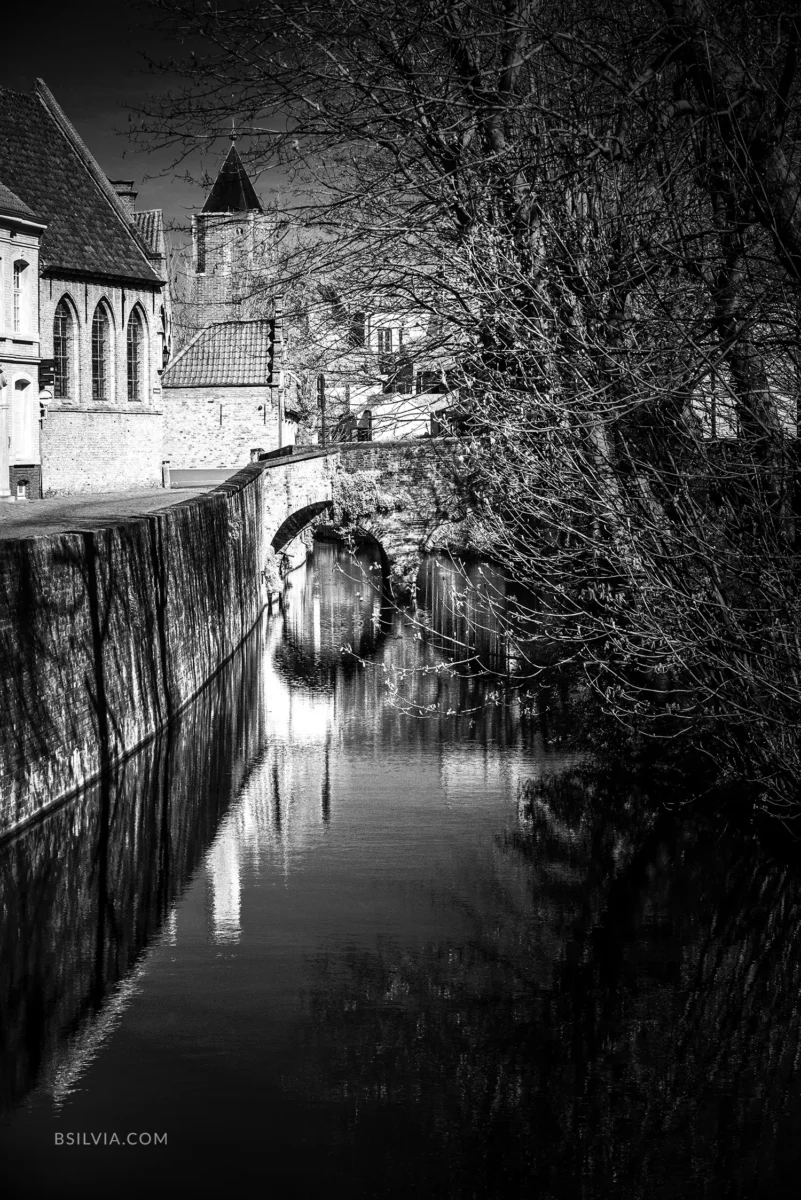
Where Are the Leaves?
One thing became obvious immediately:
Infrared photography really comes alive with foliage.
And right now?
Nothing.
No leaves, no blooming trees, no glowing white IR magic. Just bare branches and stone textures. Which is not bad — just very different from the classic infrared look.
So instead of chasing the “typical” IR aesthetic, I leaned into contrast, light, and structure.
And that’s where it started to get interesting.
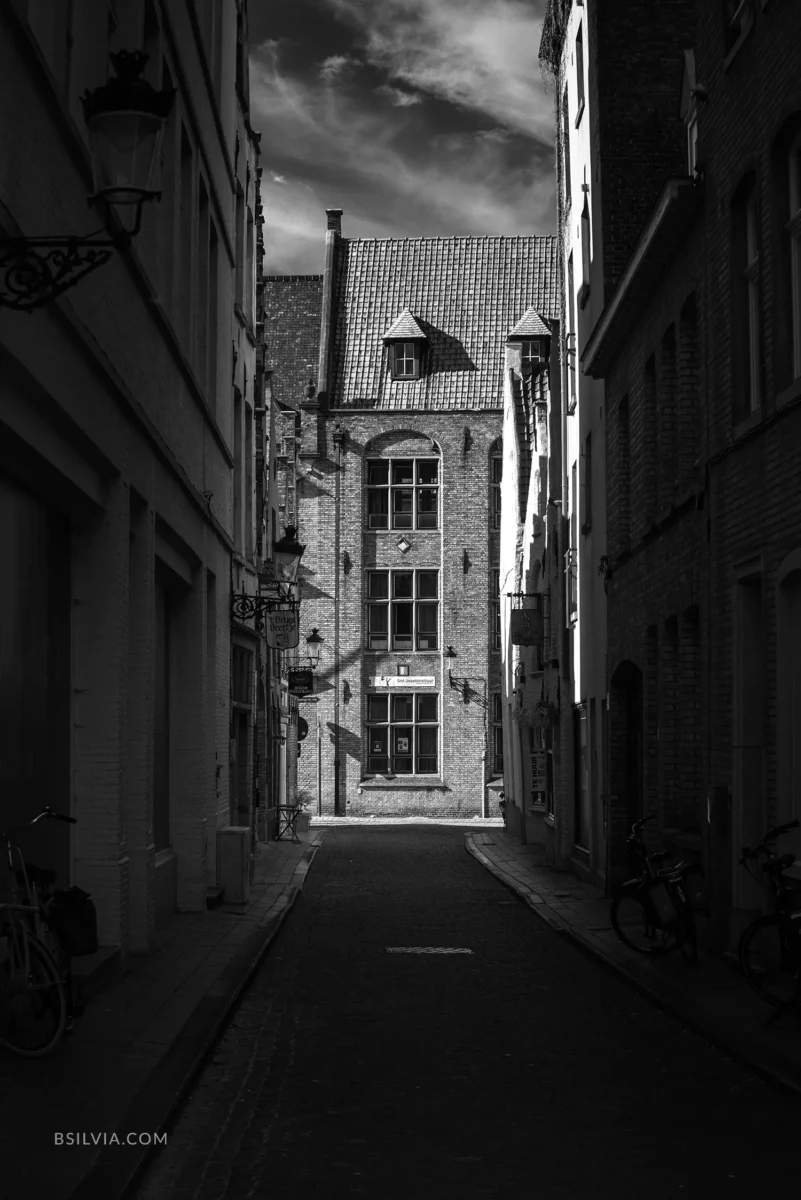
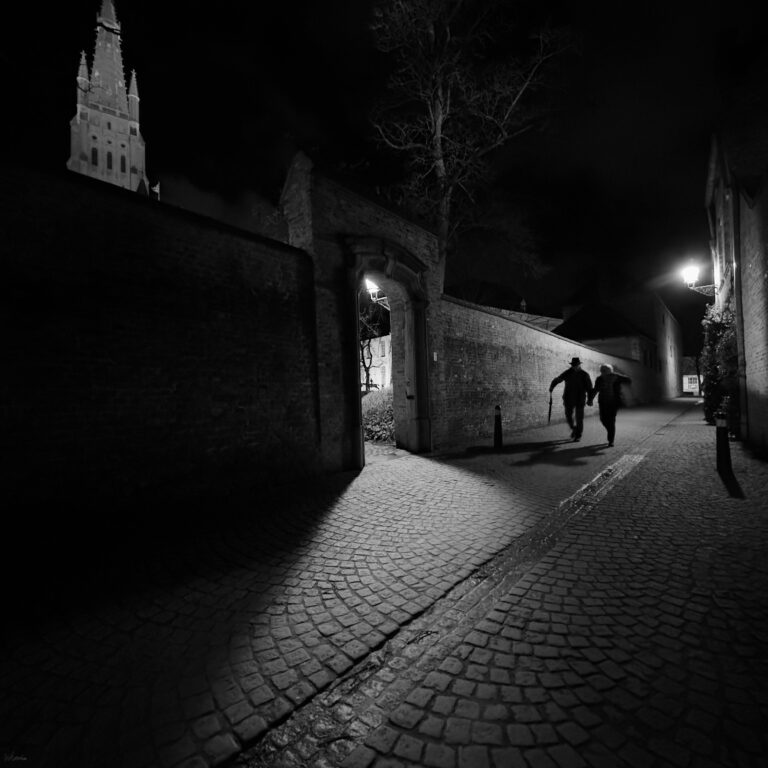
Light Over Everything
Infrared forces you to see light differently.
It’s not about color anymore — it’s about how surfaces react, how the sky shifts, how textures separate.
I found myself focusing on:
- strong shadows
- architectural lines
- dramatic skies
- clean compositions
And suddenly, Bruges looked… different.
Quieter. Stronger. More graphic.
The Missing Night Walks
One thing I really felt today:
I miss my night walks.
That time when the city empties out, when everything slows down, when you can actually take your time and wait for the frame.
Lately, I’ve been working a lot. Walking a lot. Shooting for others.
And by the time the evening comes, I don’t always have the energy to go out again just for myself.
But infrared made me want that back.
Because this kind of photography isn’t rushed. It’s not reactive.
It’s intentional.
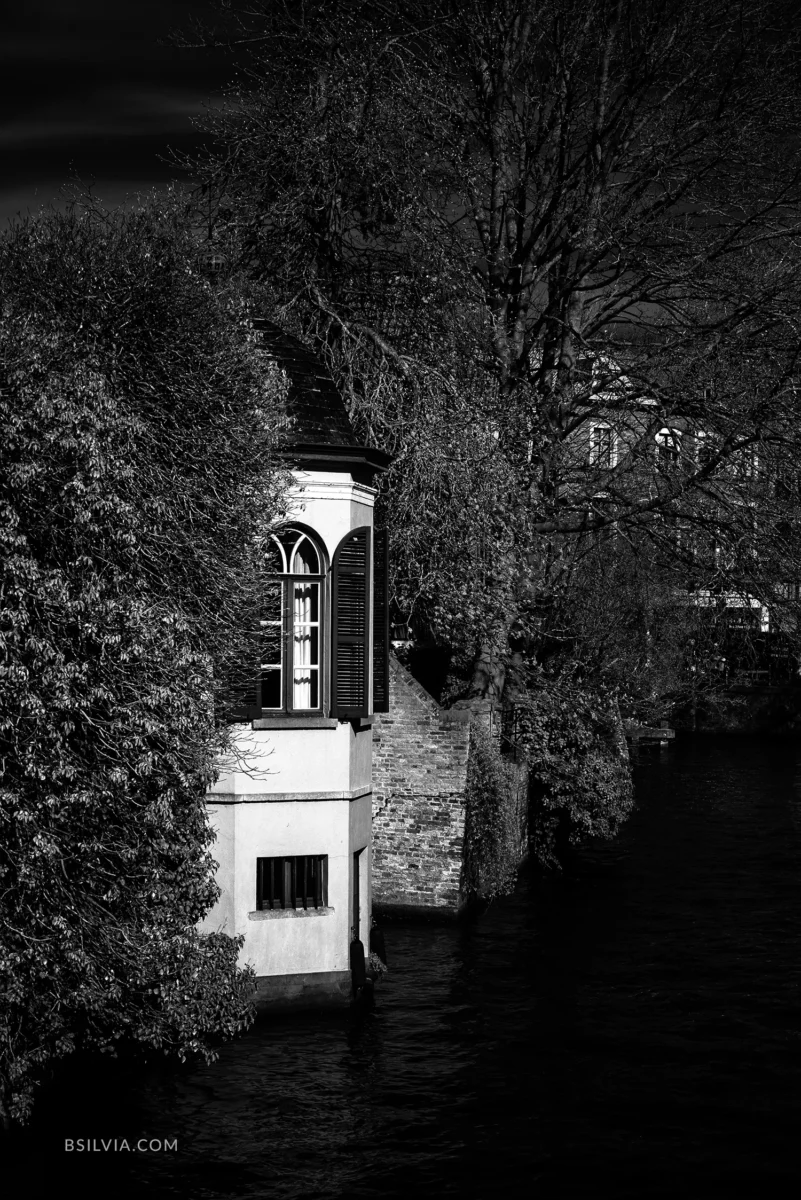
First Impressions
So, was it worth it?
Absolutely.
But not in the way I expected.
Infrared isn’t a gimmick. It’s not a shortcut to “cool images.” If anything, it’s more demanding. You have to slow down, observe more, and accept that not every scene will work.
But when it does — it really does.
This was just the beginning.
And next time… I’m waiting for the leaves.
What I Learned from My First Infrared Shoot (So You Don’t Have to Guess)
After this first walk doing infrared photography in Bruges, a few things became very clear — and if you’re thinking about trying it, these infrared photography tips might save you some time.
1. Infrared Needs the Right Season
Right now, Bruges is still in that in-between phase.
No leaves, no lush trees, no glowing white foliage — which is what infrared photography is famous for.
That means:
- less “wow effect”
- more reliance on composition and light
—>> If you want that classic infrared look, wait for spring or summer.
2. Light Matters More Than Ever
Infrared photography is not forgiving.
Flat light = flat image.
What worked best today:
- strong directional light
- deep shadows
- contrast between surfaces
—>> Think in terms of structure, not color.
3. Busy Cities Are a Challenge
Bruges is beautiful… but also very busy.
Tourists everywhere.
Boats on the canals.
People walking straight into your frame.
—>> Infrared doesn’t magically fix that.
So you either:
- wait
- reframe
- or accept imperfection
4. Telephoto Helps More Than You Think
Using the 70–200mm was actually a great decision.
It allowed me to:
- isolate details
- avoid distractions
- compress perspective
—>> Infrared + telephoto = very powerful combination.
5. It’s Slower Than You Expect
This is not “walk and shoot fast” photography.
You:
- observe more
- wait more
- adjust more
—>> and honestly, that’s the best part.
If you’re curious about infrared photography in Bruges or just starting out, these simple infrared photography tips are a great place to begin.